

Completely Changing Traditional Mold Manufacturing

How ROMI used MINGDA Tech to reduce costs, increase agility and enhance quality

In this exclusive behind-the-scenes look, learn how Romi is leveraging industrial 3D printing with MINGDA technology to transform manufacturing on the production floor. From rapid design cycles to on-demand mold manufacting, see how innovation meets efficiency in one of the Fortune Global 500 brands.

Our Solutions

Rapid Prototyping

Functional testing, hyper-realistic modeling, and fast results.

Speed Up Your Designs →

Jigs and Fixtures

Strong, versatile materials for fast, custom tool production.

Speed Up Your Designs →

End-Use Parts

Faster, lower-cost production than conventional methods.

Speed Up Your Designs →

Medical Modeling

Patient-specific medical models that improve patient outcomes.

Speed Up Your Designs →

Mold Production

Transform traditional mold making and speed up production.

Speed Up Your Designs →

Sculpture

Precise, hyper-realistic 3D printed sculptures.

Speed Up Your Designs →

Our Offerings

01

3D Printers

Industrial grade, best-in-class 3D printer portfolio, covering the entire value chain from rapid prototyping to additive printing and serial production of end-use parts.

more

02

Filaments

The largest portfolio of polymer 3D printing materials, addressing a wide range of applications as well as functional and performance characteristics.

more

03

Software

Save time and make your workflow easier with intuitive MINGDA Orcaslicer software.

more

04

3D Printing Services


Let us print your parts. From prototypes to end-use parts, supported by unmatched expertise and one of the world's largest in-house industrial additive printing fleets.

more

05

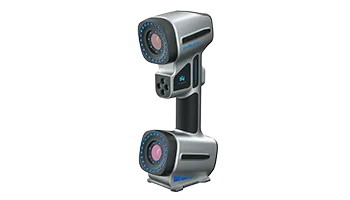
3D Scanner

The AcuRayScan now offers improved fine-detail scanning and global control capabilities. Its modular design further expands versatility, providing users with a flexible and efficient multi-scenario solution.

more

High-Quality Products

Enterprises like Insculp3D produces functional and flexible parts with precision and efficiency with MINGDA 3D solutions.

Advanced Technology

Through collaboration with MINGDA 3D, 
JS LIMOUSINE has achieved innovative breakthroughs in the field of 3D printing technology.

Reliable Customer Support

JONITE was provided by MINGDA 3D with solutions that optimize FFF printing technology, to manufacture customized 3D-printed decorative grille.

Strong Industry Reputation

Optimizing cost efficiency through innovative technology while maintaining high reliability is the reason why companies like PATAK Motor have chosen MINGDA 3D.

Request Demo

Committed to Our Customers

Complete 3D printing Services

3D Printing Services

Let MINGDA print your parts. From prototypes to end-use parts, supported by unmatched expertise and one of the world's largest in-house industrial additive printing fleets.

Explore More →

Customer Service

Committed to maximum uptime at customers, we offer global support, tailored service solutions, and knowledge & expertise to ensure your success.

Explore More →

Resources

Learn more about the insights and best practices of the Additive Manufacturing technology.

Space X and MINGDA 3D Collaborate to Advance Large-Format Additive Manufacturing in Aerospace Applications

Space X and MINGDA 3D Collaborate to Advance Large-Format Additive Manufacturing in Aerospace Applications

As the aerospace industry continues to accelerate toward higher launch frequencies, shorter development cycles, and more cost-efficient production models, manufacturing technologies are being pushed to their limits. In this highly demanding environment, additive manufacturing is evolving from a prototyping tool into a critical component of aerospace production systems.   Against this backdrop, MINGDA 3D has established a technical collaboration with Space X, supporting its aerospace manufacturing operations through the application of the MD-1000D large-format industrial FDM 3D printer. This collaboration reflects the increasing recognition of large-scale additive manufacturing as a strategic enabler for next-generation aerospace engineering.   Addressing Aerospace Manufacturing Complexity with Additive Manufacturing   Aerospace manufacturing presents some of the most complex challenges in modern industry. Components and tooling must meet strict requirements for dimensional accuracy, structural stability, repeatability, and material performance, while development timelines continue to shorten. Traditional manufacturing methods often rely on complex tooling, long outsourcing cycles, and high upfront costs—particularly for large components, customized fixtures, and low-volume functional parts.   Large-format industrial 3D printing offers a compelling alternative. By eliminating the need for molds and enabling direct digital-to-physical production, additive manufacturing allows aerospace manufacturers to respond rapidly to design changes, accelerate validation processes, and reduce overall production costs.   The MD-1000D was developed precisely to meet these industrial demands. With its expansive build volume, rigid mechanical structure, and industrial-grade motion control system, the MD-1000D enables the production of large, dimensionally stable components with consistent accuracy, even during long-duration printing tasks.   Turbine fan blade model printed by MD-1000D   MD-1000D Applications within Space X Manufacturing Workflows   Within Space X’s manufacturing and development environment, the MD-1000D is applied across multiple use cases, supporting both engineering development and production preparation. Typical applications include the fabrication of large-scale functional components, assembly jigs, fixtures, positioning tools, and auxiliary manufacturing aids used throughout the aerospace production process.   By utilizing additive manufacturing, Space X engineers are able to significantly shorten iteration cycles, producing customized tooling and test components in-house rather than relying on external suppliers. This capability enhances manufacturing flexibility, protects sensitive design data, and enables rapid optimization during testing and validation phases.   The MD-1000D’s ability to produce complex geometries in a single build allows for functional integration, reducing assembly steps while improving structural consistency. At the same time, lightweight design optimization helps minimize material usage without compromising mechanical performance—an essential consideration in aerospace applications.   Aircraft model printed by MD-1000D   Industrial Stability and Repeatability at Large Scale   One of the most critical requirements in aerospace manufacturing is process stability. Large-format additive manufacturing introduces unique challenges related to thermal management, structural deformation, and long-duration consistency. The MD-1000D addresses these challenges through a combination of robust mechanical engineering and advanced process control.   Its rigid frame design minimizes vibration and deformation, while optimized thermal systems ensure stable material deposition across large build areas. This enables repeatable, production-grade output, even for large and structurally demanding components.   By delivering consistent initial accuracy and reliable long-term performance, the MD-1000D allows additive manufacturing to move beyond experimental use and into standardized industrial application within aerospace production systems.   Strategic Significance for the Future of Aerospace Manufacturing   The collaboration between MINGDA 3D and Space X reflects a broader shift within the aerospace sector. As launch systems become more complex and production volumes increase, manufacturers are seeking technologies that offer speed, flexibility, and scalability without sacrificing precision.   Large-format industrial 3D printing is increasingly viewed as a foundational technology for this transformation. It enables distributed manufacturing, rapid response to engineering changes, and cost-effective production of specialized components—all essential capabilities for modern aerospace operations.   By integrating the MD-1000D into real-world aerospace manufacturing workflows, MINGDA 3D demonstrates its ability to support high-end industrial users operating at the forefront of technological innovation.   Conclusion   As aerospace manufacturing continues to evolve toward faster, more agile, and more efficient production models, large-format additive manufacturing will play an increasingly vital role. The application of the MINGDA 3D MD-1000D within Space X’s manufacturing ecosystem highlights the practical value of industrial-grade 3D printing in one of the most demanding engineering fields in the world.   MINGDA 3D remains committed to advancing additive manufacturing technologies that empower high-end industries—from aerospace to energy and advanced manufacturing—to unlock new levels of efficiency, precision, and design freedom. Through collaborations such as this, additive manufacturing continues to move closer to the core of industrial production, shaping the future of how complex systems are built.  

King Saud University Integrates MINGDA 3D Industrial FDM Printers to Enhance Engineering Education and Research

King Saud University Integrates MINGDA 3D Industrial FDM Printers to Enhance Engineering Education and Research

Riyadh, Saudi Arabia — King Saud University (KSU), one of the leading universities in the Middle East, has recently integrated industrial-grade FDM 3D printing systems from MINGDA 3D into its engineering and research facilities, further strengthening its capabilities in practical education, applied research, and innovation.   The adoption of MINGDA 3D’s industrial solutions reflects King Saud University’s ongoing commitment to advanced manufacturing technologies and hands-on engineering education. The systems are now supporting a wide range of academic and research activities across engineering and technical disciplines.   Advancing Hands-On Engineering Education   With the introduction of industrial-grade 3D printing, students and faculty at King Saud University are able to translate digital designs into physical parts more efficiently. The technology is being used for: ● Engineering coursework and student projects ● Printing architectural model sandboxes ● Applied research involving complex or large-format components   By incorporating production-level additive manufacturing into its educational framework, the university enables students to gain practical experience with technologies commonly used in modern industrial environments.   Saudi Arabia scale model printed by MD-1000D   Industrial-Grade Reliability for Academic and Research Use   MINGDA 3D’s FDM printers are designed for stable, long-hour operation, making them suitable for multi-user academic settings where reliability and consistency are essential. Featuring robust mechanical structures and large build volumes, the systems support continuous use for both teaching and research purposes.   The use of industrial-grade equipment allows faculty and researchers to focus not only on design outcomes, but also on manufacturing processes, material performance, and production constraints, providing a more comprehensive engineering learning experience.   Supporting Research, Innovation, and Collaboration   The addition of industrial 3D printing capability enhances King Saud University’s capacity for interdisciplinary research and innovation. The systems support collaboration across engineering, design, and applied sciences, while also opening opportunities for future cooperation with industry partners and research institutions.   MINGDA 3D is honored to support King Saud University in advancing engineering education and research through reliable additive manufacturing solutions. This cooperation demonstrates the value of industrial-grade 3D printing in academic environments and its role in preparing future engineers for real-world manufacturing challenges.     About King Saud University   Founded in 1957, King Saud University is one of Saudi Arabia’s most prestigious higher education institutions, recognized for excellence in education, scientific research, and innovation across a wide range of disciplines.     About MINGDA   MINGDA is a manufacturer specializing in industrial-grade FDM 3D printing solutions, providing reliable systems for manufacturing, education, and professional applications worldwide.  

Give Shape to Imagination, Form to the Future: MINGDA MD-1000D, Empowering Industrial Creation Without Limits

Give Shape to Imagination, Form to the Future: MINGDA MD-1000D, Empowering Industrial Creation Without Limits

(Vessel Model 3D Printed by MD-1000D) On the calm waters of San Pedro Bay, California, an unmanned vessel with sleek, sharp lines cuts through the waves, confidently heading toward the horizon. Following closely in a kayak, engineer Weston Blake cannot hide his excitement and pride. This is not a test at a secretive Northrop Grumman shipyard, but the maiden voyage of his personal vision realized - CALICO, this almost fully autonomous Unmanned Surface Vessel (USV), has just successfully completed its first round-trip journey of 1 mile (approximately 1.6 kilometers).   And the cradle of CALICO's birth was not a traditional, vast shipbuilding workshop, but an industrial-grade 3D printer-the MINGDA MD-1000D.   From Concept to Cutting Waves: One Engineer and One Printer's Revolution   Weston Blake, a seasoned engineer at aerospace and defense giant Northrop Grumman, has always harbored a passion for autonomous marine systems. However, the high cost, long lead times, and complex processes of prototype development have historically stalled innovative ideas like CALICO at the blueprint stage. Until he encountered the MD-1000D.   "The MD-1000D completely changed the game," says Weston. "It allowed me to turn a complete, functional USV into reality in my own garage. The one-cubic-meter build volume meant I didn't have to slice the hull into countless small pieces and painfully assemble them. CALICO's core hull was printed in one single, continuous piece. This isn't just manufacturing; it's a liberation of design freedom." (Vessel Model Manufacturing Process)   Key Data, Witnessing Industrial-Grade Precision and Efficiency:   Print Time:20 hours and 52 minutes-for such a large, complex industrial part, traditional methods could take weeks.   Print Configuration:Using a 0.6mm nozzle, 0.4mm layer height-ensuring exceptional print speed and structural strength while maintaining remarkable surface detail and accuracy.   Material Usage:1152 grams of Atomic Filament PETG-material sourced from our own MINGDA-developed and produced premium filament series, offering stable performance and perfect synergy with the printer.      (Vessel Model 3D Printed by MD-1000D)     In-Depth Analysis: How the MD-1000D Enabled CALICO's Outstanding Performance   1. Massive Single-Piece Printing, Unlocking Ultimate Structural Integrity The MD-1000D's monumental 1m x 1m x 1m build volume is the foundation of CALICO's success. The greatest weakness for a large USV hull lies in seams and bonding points-they are structural vulnerabilities, especially in challenging aquatic environments. The core hull's monolithic print achieved by the MD-1000D ensured unparalleled structural uniformity and sealing, directly granting CALICO superior rigidity against wave impact and reliable durability for long-term operation. This isn't just about being "big"; it's about being "powerfully integrated."   2. Native Material System: The Ultimate Guarantee of Stable Performance CALICO was printed using our MINGDA self-developed and produced Atomic Filament PETG material. Why is this so crucial? Because we deeply understand that material is the "lifeblood" of printing. We know our printers inside out, allowing us to tailor-make filaments that are a perfect match for the MD-1000D.   Exceptional Interlayer Adhesion: Ensures large parts do not delaminate under stress.   Superior Hydrolytic and Chemical Resistance: Perfectly withstands seawater erosion and UV exposure.   Excellent Balance of Toughness:Achieves the perfect balance between rigidity (maintaining shape) and toughness (absorbing impact), preventing brittle fracturing upon accidental collision.   This "native combination" of printer and material eliminates compatibility risks associated with third-party filaments, enables end-to-end quality control from feed to finished part, and vouches for the mechanical performance of every print.   3. Industrial-Grade Core, Ensuring Marathon-Stable Output Printing a large part over 20 hours long, consuming over a kilogram of material, is the ultimate test of a printer's reliability limits. The MD-1000D's industrial DNA shines here:   Full Closed-Loop Servo System:Monitors and corrects motor position in real-time, eliminating the risk of misalignment that can accumulate during long prints, ensuring precision at the 20-hour mark matches the start.   Heavy-Duty Industrial Frame & Dual Z-Axis Design: Provides extremely stable support for the massive print bed, minimizing vibrations during high-speed printing of large models, guaranteeing surface quality.   High-Efficiency High-Temperature System:Capable of stably maintaining the high-temperature environment required for printing large PETG parts, ensuring consistent material melting and bonding throughout the entire volume.   4. Designed for Function: Engineering Intelligence in the Details CALICO is not just a model; it is a tool designed to house electronics, propulsion systems, sensors, and actually sail. The MD-1000D's high precision allowed Weston to directly integrate into the design:   Accurate Internal Channels and Mounting Points:For routing cables and securing control units and battery compartments.   Perfect Propeller Shaft Housing Interfaces: Ensuring precise alignment between the power system and the hull, reducing vibration and energy loss.   Complex Hydrodynamic Curves:Rendered through smooth, precise print layers, optimizing hydrodynamic performance.   Beyond CALICO: The Vast Industrial Application Landscape of the MD-1000D The story of CALICO is just one example. The MD-1000D's one-cubic-meter "battlefield" is revolutionizing prototyping and manufacturing across industries:   Aerospace & Aviation: Printing large drone fuselages, satellite brackets, wind tunnel test models, enabling lightweighting and rapid iteration.   Automotive & Transportation: Manufacturing large automotive body panel prototypes, customized interior parts, specialized vehicle components.   Molding & Casting: Directly printing large sand molds or investment patterns, dramatically shortening lead times for large castings.   Architecture & Design: Presenting scaled architectural models, complex art installations, and functional furniture.   Education & Research:Creating customized brackets, enclosures, or demonstration models for large experimental setups.     Partner with MINGDA, Steer the Future of Manufacturing   The story of Weston Blake and CALICO teaches us that the most exciting innovations often start with an idea and a tool capable of bringing that idea to life. The MD-1000D is precisely such a tool—it delivers industrial-grade manufacturing capability into the hands of every engineer, designer, and maker.   We can't wait to find out what your next 'CALICO' will be.   Will it be a drone soaring through the skies, a robotic arm rewriting efficiency, or a piece of art redefining space? No matter how vast your imagination, the MD-1000D is ready to give it shape and launch it forward.   MINGDA MD-1000D Industrial 3D Printer   Not just printing, but building.   Not just creating, but revolutionizing.     Contact us today to learn how the MD-1000D can turn your grand vision into the next reality that shakes the world. Visit our website to see more success stories like CALICO and access exclusive industry solution whitepapers. Let manufacturing know no bounds.  

MINGDA 3D Printing Empowers Automotive Innovation with Toyota‑Related Applications in Malaysia

MINGDA 3D Printing Empowers Automotive Innovation with Toyota‑Related Applications in Malaysia

As the automotive industry continues its transition toward electrification and smarter vehicle design, additive manufacturing is increasingly being adopted to support early-stage development and engineering validation.   In Malaysia—a growing automotive hub in Southeast Asia—engineering teams involved in Toyota-related projects are using 3D printing to improve prototyping efficiency and development flexibility.   Application Requirements   These projects typically require: ● Rapid prototype development ● Functional part testing ● Custom fixtures and small tooling ● Frequent design iteration during development stages     MINGDA Solution   To support these needs, automotive engineers introduced MINGDA MD-400D 3D printers into their workflows.   With a 400 mm build volume, the MD-400D is well suited for producing small- to medium-sized automotive components, including brackets, housings, fixtures, and other functional parts used during engineering validation.   Real-World Results   By producing parts in-house, engineering teams are able to: ● Shorten development cycles ● Reduce dependence on external suppliers ● Perform faster testing and design adjustments ● Improve overall workflow efficiency   Practical application cases show how MINGDA systems support stable, repeatable printing for daily engineering use.   Customer Feedback   “Our team has benefited from the reliability and ease of use of MINGDA printers,”said an engineer involved in Toyota-related automotive projects in Malaysia.   “Being able to quickly prototype parts and make design changes internally has significantly improved our development efficiency.”   Support & Integration   In addition to hardware, MINGDA provides structured training and responsive technical support to ensure smooth integration into existing engineering environments and effective operation from the early stages of deployment.       Conclusion   As automotive development continues to evolve, MINGDA remains committed to delivering practical, reliable 3D printing solutions that support efficient prototyping and engineering innovation across global automotive sector.