






Addressing the digital production needs of ultra-large supercar models, the MD-1000D delivers stable and scalable industrial manufacturing capabilities.

As the forming boundary of industrial-grade 3D printing continues to expand, a paradigm shift in transportation manufacturing is quietly taking place. Instead of following the traditional vehicle manufacturing logic of stamping and welding, we have chosen a more disruptive path: disassembling a 1:1 full-size Super sports car sports car model into multiple 3D-printable modules to complete the assembly of the model car.
Nearly 80% of all 3D printing applications fall within the automotive industry. This inspired us to embark on creating a full-size sports car model. Prior to launching the project, we conducted thorough research and found that traditional manufacturing methods for such a model involve a series of complex, labor-intensive steps—starting with clay modeling, followed by fiberglass mold making and subsequent replication processes. In contrast, 3D printing eliminates the need for manual sculpting entirely. With proficient CAD modeling and 3D printing capabilities, we can directly translate digital models into physical objects.
| Comparison Metrics | Traditional Process (FRP) | 3D Printing Solution |
| Total Project Duration | 2-4 months | 1 month |
| Total Cost | $80,000-$10,0000 | Approximately $20,000 |
| Customization Flexibility | Mold modification needs re-carving clay & remaking FRP molds: 1–2 months, $10k–$15k | Modify CAD model & re-print; no mold making or extra revision cost |
| Component Replaceability | Damaged parts need full resin repair & remanufacturing: 7–15 days | Print & replace single damaged modules independently; only module consumables + hours of printing |
| Precision Controllability | Dependent on manual work; uneven gaps, surface accuracy affected by humans | Controlled by digital parameters; ±0.8mm tolerance, uniform gaps & stable accuracy |
| Material Wastage Rate | 30%-40% due to mold making and manual cutting | Only 2–3% (Loss limited to support structures only) |
This project took 1 month and consumed a total of over 800kg of PETG printing consumables. Relying on large-format industrial-grade 3D printing equipment, we successfully realized the complete implementation from CAD modeling to the physical realization of the sports car model. This is not only an artistic model for display, but also a systematic verification of the feasibility of large-format 3D printing in the field of automotive field. We aim to explore whether the combination of 3D printing technology and refined modular design can provide a brand-new solution for customized automobile production, rapid iterative development and low-cost maintenance.
Technology Selection and Design Logic
1.Core Design Concept: Modular Architecture Adapted to 3D Printing
The core design logic of this project is centered on a modular architecture adapted to large-format 3D printing, which decomposes the entire vehicle into component units with high printing efficiency and precise assemblability. The core design objectives include:
● Matching the limits of printing equipment: The dimensions of components are strictly limited within the effective forming range of industrial-grade printers to avoid deformation and precision failure caused by oversize printing.
● Standardized interface design: All components are designed with unified positioning and connection interfaces to ensure assembly accuracy and structural stability, while improving assembly efficiency.
● Fault tolerance and maintainability: Damaged individual components can be directly replaced without disassembling the entire vehicle structure, greatly reducing the cost and complexity of later maintenance.
2.Selection of Printing Device
To support the efficient and stable printing of full-size components, this project adopts the MINGDA MD-1000D large-format industrial-grade FDM 3D printer, with the core selection basis as follows:
● Advantage of large forming size: The maximum forming size of the equipment can cover the printing needs of a single large body component, reducing excessive disassembly and ensuring the structural integrity of components.
● Stability of continuous production: It supports 24-hour unattended continuous printing, adapting to the mass component production needs within the 1-month project cycle and avoiding efficiency loss caused by frequent shutdowns.
● Compatibility with multiple materials: It is compatible with various printing consumables such as PLA, PETG and engineering materials, and can flexibly switch material schemes according to the performance requirements of different components.
● High-precision control capability: It features a precise temperature field regulation and motion control system, controlling component dimensional tolerance within ±0.8 mm and laying a solid foundation for smooth contour lines and precise alignment during subsequent vehicle assembly.

MINGDA MD-1000D
3.Selection of Component Connection and Assembly Technology
Tenon-and-mortise positioning structure: Concave-convex tenon-and-mortise structures are designed on the edges of components to realize rapid alignment and initial positioning during assembly, effectively controlling the position deviation between components and ensuring the smooth lines of the whole vehicle.
Snap pre-fixation: Snap designs are adopted in non-core stress-bearing areas to realize rapid pre-connection between components, reduce the use of screws and improve assembly efficiency.
Screw reinforcement: Additional M3/M4 specification screw holes are set in core load-bearing areas such as the body frame, and the overall structural strength is further improved through mechanical locking to meet the safety requirements of static display and regular handling.
This connection scheme not only ensures assembly convenience, but also compensates for the strength limitations of pure snap-fit connections through multiple reinforcement methods, achieving a balance between assembly efficiency and structural reliability.

(Dovetail function of Orca slicer)
Project Implementation and Cycle Management
1.Core Project Objectives and Technical Indicators
The core objective of this project is to realize the 3D printing and static display of a 1:1 full-size Super sports car sports car, and simultaneously complete the engineering feasibility verification of large-format additive manufacturing in the field of transportation. Clear core technical indicators are formulated to ensure that the project implementation is well-founded and the results are quantifiable. The core technical indicators are as follows:
● Dimensional accuracy: The deviation of key dimensions of the whole vehicle from the original model is ≤±1cm, and the assembly gap of components is ≤0.8mm, ensuring the smoothness of appearance lines and the reduction of proportions.
● Structural performance: The static load-bearing capacity of the whole vehicle is ≥200kg, and the core load-bearing components have no obvious deformation or fracture, meeting the requirements of static display and regular handling.
● Cycle and consumables: The total implementation cycle is ≤30 days, and the total consumption of consumables is controlled within 850kg to achieve a balance between efficiency and cost.
2.Project Cycle Planning and Time Allocation
The total project cycle is 30 days (1 months). Adopting a promotion mode of "phased progression and parallel operation", the overall work is divided into 3 core stages, with clear time nodes, core tasks and deliverables for each stage to ensure the smooth connection of all links and avoid project schedule disconnection. The specific time allocation and core work are as follows:
2.1 Modeling and Structural Design Stage (Days 1-5)
This stage is the foundation of the project, with the core objective of completing the construction of the whole vehicle digital model and component disassembly to provide accurate digital basis for subsequent printing and assembly. The core work includes:
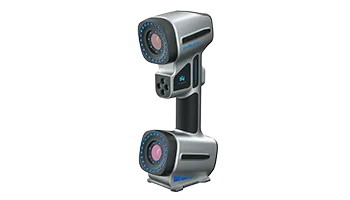
● Data collection and restoration of the original model: The original dimensional data of the 1:1 Super sports car sports car is obtained via 3D scanning technology, with scanning deviations corrected to ensure proportional consistency between the digital model and the physical vehicle, and focus on restoring the detailed features of key parts such as body surfaces, wheel hubs and rear wings
● Disassembly of the whole vehicle structure: Based on the forming limits of printing equipment and the stress characteristics of components, the whole vehicle is disassembled into 12 independent components, with clear dimensions, functions and connection modes of each component, avoiding oversize components or unreasonable disassembly schemes due to stress.
● Interface design and verification: Complete the design of positioning and connection interfaces for all components, simulate the assembly process through digital simulation, correct interface deviations to ensure component assembly accuracy. The deliverables include a complete CAD digital model, component disassembly drawings and interface design drawings.
2.2 Mass Printing and Quality Control Stage (Days 6-25)
This phase constituted the core execution of the project, entailing the longest duration and the largest consumable consumption. Its primary objective was to achieve the batch and stable printing of components, exercise strict quality control over them, and ensure the pass rate met the set standard. The core tasks included:
1.Equipment commissioning and consumable preparation: Commission the MINGDA MD-1000D printers in advance, inspect the operational status of the nozzles, heated beds and feeding systems to ensure the stability of continuous printing; Prepare over 800kg of PETG consumables in advance in accordance with the material allocation plan, and conduct drying treatment on the consumables to prevent printing quality issues caused by moisture absorption.
2.Batch printing execution: Launch 8 MD-1000D printers for parallel printing simultaneously in line with the printing schedule (allocate components rationally based on the number of devices), adopt a 24-hour unattended printing mode. Staff record the printing status on a daily basis and promptly handle material refilling and replenishment
2.3 Post-processing and Assembly Stage (Days 26-30)
This phase served as the project's final wrap-up stage, with the core objective of completing component post-processing, full-vehicle assembly and appearance optimization to realize the physical completion of the entire vehicle. The core tasks included:
1.Basic component processing: Clean all printed components and remove support structures, burrs and excess edges and corners;
2.Secondary precision inspection of components: Conduct a second round of precision testing on the post-processed components to ensure dimensional deviations meet technical specifications and prevent component deformation caused during the post-processing process;
3.Full-vehicle assembly: Complete the splicing and fixation of all vehicle components in a front-to-middle-to-rear assembly sequence, and focus on controlling the connection strength of core load-bearing areas

Printing Process and Key Parameter System
1. Selection and Adaptation of Core Printing Process
Based on the MINGDA MD-1000D large-format industrial-grade 3D printer, this project mainly adopts the FFF (Fused Filament Fabrication) process. This process has the advantages of strong material compatibility, large forming size, controllable cost and convenient operation, which is perfectly adapted to the mass printing needs of full-size sports car components. At the same time, the process details are optimized according to the performance requirements of different types of components to achieve a "precise matching between the process and component functions and material performance".
2. Construction of Key Printing Parameter System
Printing parameters are the core determinants of component forming quality, strength and printing efficiency. Combining the characteristics of the equipment, consumables and component functional requirements used in the project, a "classified and differentiated" key parameter system is constructed, clarifying the core parameter standards for various types of components to ensure the consistency and stability of mass printing. The core parameters include three categories: layer thickness, filling rate and printing speed with the specific parameter settings as follows:
2.1 Layer Thickness Parameter Setting
Layer thickness directly affects the forming accuracy, surface quality and printing efficiency of components. Smaller layer thickness brings higher forming accuracy and smoother surface but lower printing efficiency and more consumable consumption; Larger layer thickness results in higher printing efficiency but lower forming accuracy and surface quality. Combined with component types, differentiated layer thickness settings are adopted:
● Body and front cover parts: 0.3mm layer thickness is adopted for printing, giving priority to ensuring surface finish and forming accuracy, reducing interlayer texture exposure, lowering post-processing difficulty, adapting to the color rendering of colored PLA and ensuring smooth vehicle appearance contour lines
● Support structures: 0.4mm layer thickness is adopted for printing to improve support strength, avoid support collapse, reduce the adhesion between supports and components for easy subsequent removal and lower post-processing workload.
● Rear cover parts (rear wings, rear wheel hubs): 0.24mm thin layer is adopted for printing to balance accuracy and strength and ensure the dimensional stability of functional components.
2.2 Filling Rate Parameter Setting
Filling rate is a key parameter affecting component weight, strength and consumable consumption. Higher filling rate leads to higher component strength and heavier weight but more consumable consumption and lower printing efficiency; Lower filling rate results in less consumable consumption and higher printing efficiency but lower component strength. Combined with the stress requirements of components, the filling rate is accurately set to achieve a balance between strength, cost and efficiency:
● Appearance cladding parts: The filling rate is set at 8%-10%. Without bearing core loads, the priority is to ensure the forming quality of appearance, while reducing consumable consumption and printing time. A Gyroid filling method is adopted to improve the anti-deformation capacity of components.
● Functional components (wheel hubs, rear wings, etc.): The filling rate is set at 25%-30% to balance strength and lightweight, ensure the durability of functional components and adapt to the needs of wheel hub support and rear wing static load-bearing.
● Connection interface parts: The filling rate is uniformly set at 50% to improve interface strength, ensure firm connection after assembly and avoid fracture or deformation at the interface.

2.3 Printing Speed Parameter Setting
Printing speed affects printing efficiency and component forming quality. Excessively high speed is prone to problems such as poor interlayer bonding, component deformation and nozzle material leakage; Excessively low speed will prolong the printing cycle and increase consumable loss. Combined with component types and layer thickness, the printing speed is optimized to achieve a balance between efficiency and quality:
Appearance cladding parts (thin layer printing): The printing speed is set at 120-150mm/s. high-speed printing ensures smooth lines, reduces interlayer textures and defects and improves surface finish.
Functional components: The printing speed is set at 80-100mm/s to balance accuracy and efficiency and ensure the dimensional stability of functional components.
Support structures: The printing speed is set at 60-70mm/s to realize rapid support printing, improve efficiency and ensure support strength at the same time.
3. Anti-deformation and Anti-warping Control Scheme for Large-size Components
During the printing of large-size components (such as chassis main body, car doors and engine hoods), problems such as warping, deformation and interlayer cracking are prone to occur due to large forming size, long printing cycle and excessive thermal stress accumulation, which is the core difficulty of the printing process. This project effectively solves the deformation problem of large-size components through a three-dimensional prevention and control scheme of "process optimization+structural design+equipment management and control" to ensure the forming quality of components. The specific measures are as follows:
Process optimization and prevention: Adopt the "layered and segmented printing" process, divide large-size components into multiple printing segments, pause printing after each segment (5-10cm in height), let the components cool naturally to room temperature and then resume printing automatically to reduce thermal stress accumulation; Optimize the cooling system, turn on the top fan of the printer and adopt a "low-speed continuous cooling" mode to avoid stress concentration caused by excessive local cooling; At the initial stage of printing, adopt "low-speed and low-temperature" preheating printing, reduce the printing speed by 20% and the nozzle temperature by 10℃ for the first 5 layers to improve the adhesion between components and the hot bed and avoid bottom warping.
Structural design and prevention: Design skirts at the edges, corners and other easy-warping parts of large-size components, which can be removed after printing to effectively inhibit the warping of component edges; When disassembling components, try to avoid designing overly large plane structures and adopt arc or polyline transitions to disperse thermal stress.
Equipment and environmental management and control: Conduct printer calibration work before printing to ensure the flatness of the printing platform and avoid component deformation caused by platform inclination; Keep the environmental temperature stable (20-25℃) during printing to avoid thermal stress changes caused by temperature fluctuations; Regularly check the feeding system to ensure smooth feeding and avoid overall deformation caused by local component defects resulting from material feeding jams or interruptions; Do not take out large-size components immediately after printing, but let them cool naturally to room temperature in the printer to reduce deformation caused by temperature difference.
Summary
Centering on the 3D printing implementation of the 1:1 full-size Super sports car sports car model, this project carried out systematic engineering practice. Taking 1 month and consuming more than 800kg of PETG consumables, relying on the MINGDA MD-1000D large-format industrial-grade FFF 3D printer, we completed the full-process implementation from original model data collection, CAD modeling, component disassembly and mass printing to post-processing and precise assembly, and successfully achieved the preset core objectives. This project verifies the feasibility of large-format additive manufacturing in the field of transportation display models and provides a complete practical reference for the implementation of similar projects.
Compared with traditional automobile model manufacturing processes, we saved nearly a month of manual modeling time in the early stage. Furthermore, all 8 printers were operated by a single employee, resulting in significant savings in labor and material resources. We selected cost-effective and durable PETG as the printing material, which cuts material costs by over $50,000+ compared with clay modeling and FRP shaping.
The engineering practical value of this project lies not only in the successful implementation of a full-size 3D-printed sports car display model, but also in exploring an innovative path combining additive manufacturing with modular design. Compared with the traditional automobile model manufacturing process, the technical scheme adopted in this project greatly reduces the cost of customized development and shortens the production cycle. At the same time, it has the advantages of replaceable individual components and convenient later maintenance, providing a brand-new solution for scenarios such as automobile cultural and creative display, science popularization education and personalized customization. In addition, through a large number of test printing and parameter optimization, the project has accumulated rich experience in large-format FDM printing technology and further verified the feasibility and economy of the FDM process in the mass production of large-size transportation components.
Related News





Contact US
Product Information
Quantity
Unit
Piece
Support order samples, customization, wholesale direct, and complete payment. If the product you look for does not have corresponding customized content, pls fill out the form below to contact us, and we will reply ASAP.