






How does MD-1000D Help ROMI Reduce its Mold Manufacturing Time by 50%?
How cutting-edge FDM 3D printing is revolutionizing traditional mold manufacturing, enabling a more efficient and cost-effective production landscape?
Romi was founded in 1930, it has grown into a globally recognized company supplying high-quality industrial machinery, automotive components, and technology solutions to diverse sectors worldwide. The large print size of MD-1000D industrial 3d printer allows several different larger parts to be printed at once. The bigger printing area is one of the reasons ROMI chose MINGDA 3D. It helps them save cut the time needed for the mold manufacturing cycle.
The Critical Role of Prototyping
Due to ROMI's fully independent development of proprietary mold designs, the company faced collaboration challenges in the early stages. Prior to implementing 3D printing technology, outsourcing prototype production was not feasible, because of NDA, which consequently constrained design iteration efficiency.
Manufacturing Time in Half
While equipped with cutting-edge manufacturing systems—such as Japanese 5-axis CNC machines, German PCD diamond tools, and Swiss precision fixtures—ROMI encountered bottlenecks. Pre-machining programming proved labor-intensive, requiring meticulous input for every geometric detail, while subtractive methods led to material waste and prolonged lead times.
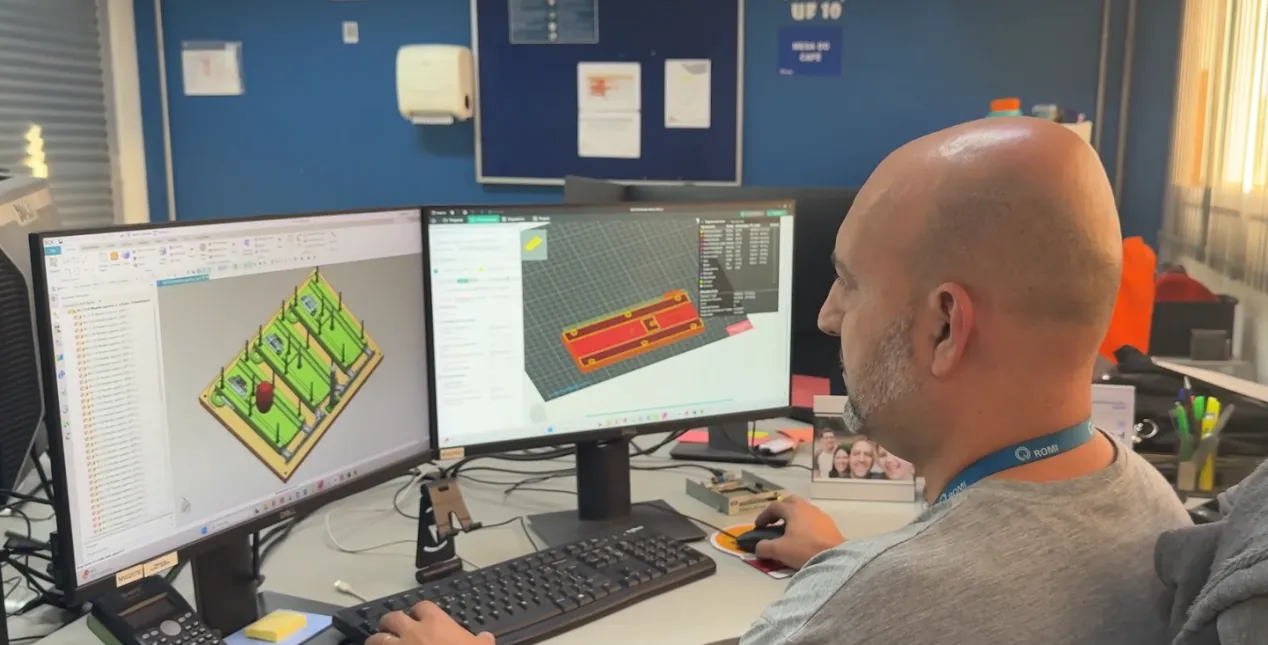
Adopting 3D printing resolved our prototyping hurdles entirely. We’ve relied on this technology for more than seven years.
–Mr. Celso, ROMI Engineering Team
ROMI's diverse product portfolio ranges from Vehicle Bracket to miniature components. Conventional 3D printers forced time-consuming model segmentation-printing parts individually and assembling them later. MD-1000D’s expansive build volume revolutionized this process, enabling simultaneous production of multiple large parts. This efficiency gain was pivotal in slashing prototype validation timelines by 50%, a key factor in ROMI's partnership with MINGDA 3D.
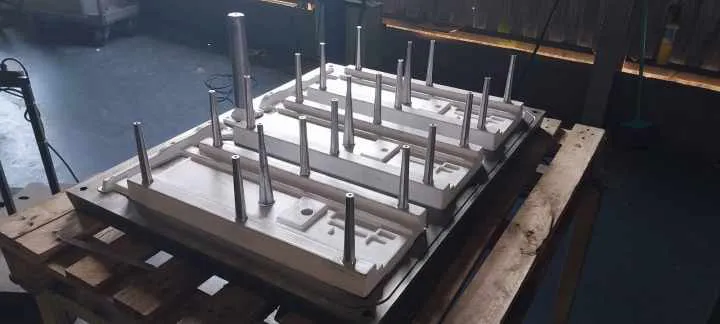 Printed by HtPA-GF25
Remote Oversight Enhances Operational Efficiency
By leveraging MINGDA self-developed slicing software and monitoring systems, ROMI's engineering team has achieved substantial work-flow optimization. The integrated software platform enables seamless collaboration, effectively eliminating numerous potential issues during development. According to Mr. Celso, the remote monitoring capability via MINGDA has been transformative - production status can now be tracked in real-time from any location through mobile or desktop devices, significantly boosting both operational flexibility and management effectiveness.
Expanded Material Capabilities Drive Innovation
The engineering team particularly emphasized MD-1000D's exceptional performance with advanced materials like Nylon and carbon fiber composites. Previous 3D printing solutions from other manufacturers frequently encountered failures, particularly when processing large-scale or delicate components. MD-1000D has demonstrated superior reliability and print quality compared to all our previous equipment, noted Mr. Celso during product evaluation.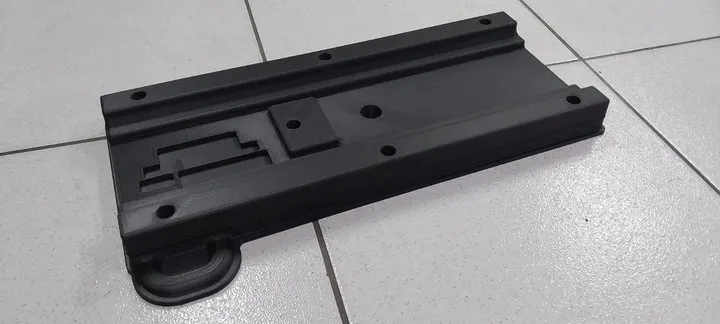
Printed by HtPA-CF25
Future-Ready Manufacturing Solutions
Through its partnership with MINGDA, ROMI has successfully halved its mold manufacturing timeline. Currently, the 3D printers serve as indispensable tools across their multiple business units - from initial concept modeling to component development. As material compatibility continues to advance, MINGDA's solutions now serve beyond ROMI's mold manufacturing, enabling functional end-use parts and custom tooling applications.
MINGDA 3D will continue to provide global manufacturers with high-performance, highly replicable industrial-grade FDM printing solutions, empowering clients to achieve genuine production transformation in their respective fields.
Related News




Contact US
Product Information
Quantity
Unit
Piece
Support order samples, customization, wholesale direct, and complete payment. If the product you look for does not have corresponding customized content, pls fill out the form below to contact us, and we will reply ASAP.