






Large-Format FDM 3D Printing: How to Reshape the Development Process of Automotive Aerodynamics Components?
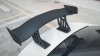
In the automotive modification world, the rear spoiler remains a focal point where performance and aesthetics converge. As an aerodynamic component, the modern spoiler has long transcended its traditional functional boundaries to become a core symbol of performance and a medium for personalized expression in high-end vehicles.
Who can resist the allure of a rear spoiler?
As an iconic feature of race cars and high-performance vehicles, the spoiler's unique and eye-catching design often makes it the top choice for owners seeking modifications. However, its appeal extends far beyond aesthetics. In reality, it plays a critical role in enhancing a vehicle's stability and performance, contributing indispensable aerodynamic benefits.
Traditional spoiler development relies on CNC machining or mold-based manufacturing—processes that are costly, time-consuming, and severely constrain innovation iteration and small-batch production (e.g., for racing or custom parts). By leveraging the MD-1000D equipment and high-performance composite materials, we have successfully achieved monolithic 3D printing of 1:1 scale spoilers using FDM 3d printing technology. Case studies demonstrate that this approach can reduce development cycles by an estimated 70% while enabling complex internal lightweight structures impossible to achieve with conventional methods. This breakthrough offers a disruptive solution for agile development and customized production of automotive aerodynamic components.
What is FDM 3D Printing?
Fused Deposition Modeling (FDM) is an additive manufacturing (AM) process that constructs three-dimensional objects through the precise, layer-wise deposition of molten thermoplastic materials. A continuous filament of engineering-grade polymer (e.g., ABS, PLA, PETG, or composite blends) is fed into a heated extruder, where it is plasticized and forced through a micron-resolution nozzle. This extruder traverses along toolpaths defined by sliced G-code, depositing the material onto a build platform. Each layer fuses with the preceding one through thermal bonding, solidifying upon cooling. The process repeats iteratively, building the part from the bottom up. FDM is characterized by its support of complex geometries, functional prototyping, and production of end-use parts with tailored mechanical properties, utilizing a wide range of thermoplastics.
About the FDM Filament
For this print, considering the model's extensive overhangs, we utilized PET-CF as the primary build material and the S-Multi as the support material.
PET-CF offers a compelling combination of performance, practicality, and value. A significant advantage is its exceptional thermal stability; when annealed, it can withstand temperatures ranging from 100°C to 150°C, making it suitable for most outside environments. Furthermore, it exhibits low hygroscopicity, which minimizes moisture absorption and drastically reduces warping during printing. Inherently, PET-based materials provide excellent resistance to UV radiation and hydrolysis, ensuring long-term durability and making printed parts ideal for outdoor applications. Also, the material itself is cost-effective, and its an economical and efficient printing process overall.
S-Multi is a quick-Remove Support Material can achieve fast and easy peeling by adjusting the bonding strength to the support surface of the body material and the bonding strength of S-Multi itself. It does not require the use of water or solvents during the removal of the support and does not produce water pollution, which is safe and environmentally friendly. It's very suitable for IDEX FDM printers.
Configuration for PET-CF and S-multi
In our previous article, we discussed key considerations for printing with PET-CF. This time, we will focus on the essential details to note when slicing for S-Multi support.
S-Multi very easy to absorb moisture within the environment, and printing after absorbing moisture will result ozzing, extruding with bubbles and rough surface appearance, thus reducing print quality. It is recommended that put the filament into a dry box (humidity below 15%) immediately after opening its vacuum foil bag for printing.
In dual extruder printing mode, the material in the standby nozzle will deteriorate due to prolonged heating, and the deteriorated material needs to be squeezed out before the print nozzle is switched, so it is necessary to use the Wipe tower function in the slicing software.
After the printing is completed, the printed part can be annealed and then the S-Multi removal step can be performed. During the annealing process, it can play the role of supporting the body material, reducing the dimensional deformation of the body material and improving the mechanical properties of the body material. The setting of annealing should be follow the requirements of the body material (PET-CF).
Conclusion:
The combination of PET-CF and S-Multi demonstrates a significant advantage: support structures on overhanging surfaces detach with exceptional ease, resulting in a superior surface finish compared to single-material printing.
Leveraging the MD-1000D platform and high-performance materials, we have successfully achieved monolithic manufacturing of a full-scale rear spoiler. This accomplishment validates the technology's immense potential to drastically shorten development cycles, reduce costs, and unlock unprecedented design freedom. This represents more than just an upgrade in manufacturing—it inaugurates a new era of accessible development and extreme customization for the automotive aftermarket and high-performance sectors. As materials and technology continue to evolve, additive manufacturing is poised to play an increasingly pivotal role on the aerodynamics stage.
Related News





Contact US
Product Information
Quantity
Unit
Piece
Support order samples, customization, wholesale direct, and complete payment. If the product you look for does not have corresponding customized content, pls fill out the form below to contact us, and we will reply ASAP.